Are you coming to Bulgaria in June? Well, first of all, I’d like to welcome you to our beautiful country! 💙
It’s always best to prepare in advance before visiting a new country, so in this article I’ve gathered some useful information to ease you with the preparations for your trip. It contains tips regarding the month of June, but also general information for every visitor, such as using public transportation in our capital Sofia, what currency you need to bring with you, clarifications when traveling by train, some unwritten rules that could cause turmoil, and many more. I hope you’ll find this article helpful!
1ST OF JUNE – INTERNATIONAL CHILDREN’S DAY
Bulgaria is among the countries that celebrate International Children’s Day on 1st of June. It is not an official holiday, so all busninesses, banks, public sector institutions, schools, and kindergardens work normally.
As mentioned, Children’s Day is not celebrated officially, but usually schools, kindergardens, daycare centers, municipalities, and various private businesses (malls, restaurants, amusement parks, etc.) organize all kinds of fun activities for kids.
2ND OF JUNE – SIRENS FOR A FALLEN HERO
Long story short, in 1396, Bulgaria fell under Ottoman rule (today’s Türkiye) that continued for a few hundred years. In the 19th century, Bulgarians began to rebel against the oppressors. There were many secret committees and preparations for uprisings and riots.
Hristo Botev is one of the most significant and important fighters for freedom. He dedicated his entire life (only 28 years) to the battle for free Bulgaria. He traveled throughout and outside of the country speading the word for the upcoming uprisings and gathering men for his cheta (чета; old Bulgarian word – has the meaning of a “squad/combat unit”).
In 1876, Hristo Botev was in Romania where he and his men boarded the Austro-Hungarian ship Radetzky, which was traveling upstream the Danube river and docking in several Romanian ports. Hristo Botev managed to convince the ship’s captian to dock in Kozloduy (Bulgaria) where he and his cheta got off. They began a walk towards Vratsa fighting the enemy and gathering more men along the way. Eventually, they reached Vola region in Stara Planina Mountain (The Balkan) near Vratsa, where Hristo Botev and his cheta fought for the last time before falling victim to the battle.
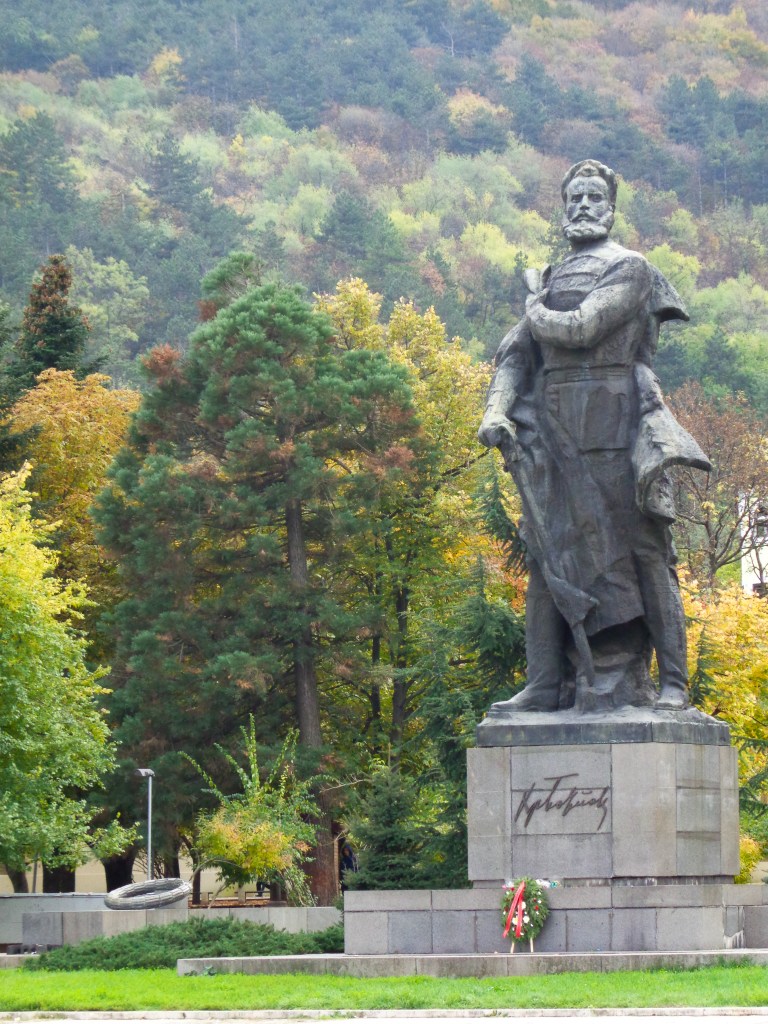
On 2nd of June, Bulgaria commemorates the memory and deeds of Hristo Botev for the freedom of Bulgaria. At exactly 12:00 p.m., sirens sound in cities throughout the country for two minutes. It is customary to stop what we are doing and pay tribute to our fallen hero during the sirens (you can even see drivers pull over and stand still by their cars).
WEATHER IN JUNE
June is the first summer month in Bulgaria. The average temperatures are 20°C-25°C and the Sun is getting stronger and stronger. Daytime temperatures can reach about 28°C-33°C, so sunscreen is a must, especially if you have a pale complexion. Try to stay indoors or in shades between 11:00 a.m. and 4:00 p.m. when the sunrays are the strongest. Always carry water with you and stay hydrated. If you have one, wear a hat or UV protection umbrella.
However, June is also a rainy month with tendency for thunderstorms. Usually, we talk about afternoon showers that come unexpectedly, often accompanied by thunders, lightnings, strong wind, and sometimes hailstorm. These weather conditions are not to be underestimated and can be quite dangerous, so be cautious!
Some years, June is much rainier than usual and therefore much cooler. Daytime temperatures may be much lower than the abovementioned, barely reaching 20°C. You should definitely pack warmer clothes along with the shorts, t-shirt, top tanks, dresses, and sandals. It’s always good to carry a jacket – the evenings and mornings can be quite chill, especially after rain.
Bulgaria is located within a transitional region between continental and Mediterranean climate, which results in sudden weather changes and large temperature amplitudes between different parts of the country. You should always check the forecast in the area you’ll be visiting before coming!
TOURISM OPPORTUNITIES IN JUNE
June brings the summer to Bulgaria and therefore all summer activities. From lying on a beach, to climbing mountains, exploring the local folklore and cuisine, attending music festivals, and many more, June offers countless options for tourism, especially outdoors.
*Sea tourism
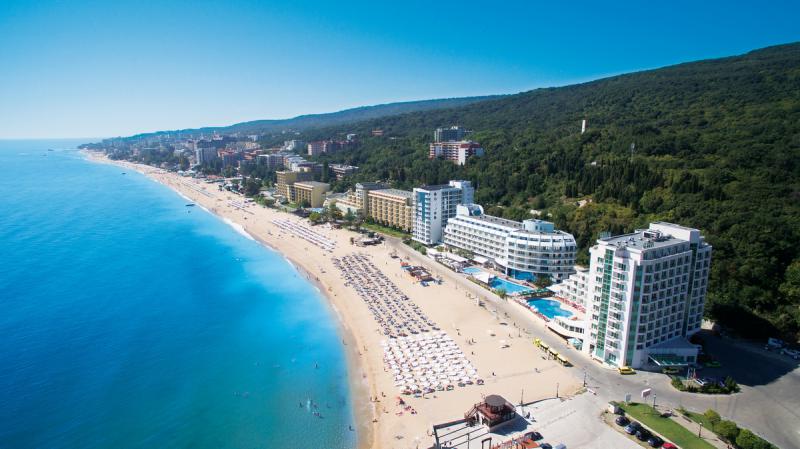
The summer season in Bulgaria starts at the end of May or beginning of June. However, keep in mind that the sea temperature is still quite cool – about 17°C-22°C at the beginning of the month, gradually warming up to about 23°C-25°C at the end of it. If you choose to visit Bulgaria’s Black Sea in June, I would suggest to do it during the second half of the month. And it’s preferable to choose a southern resort – the water is usually warmer than in the north.
Bulgaria has a diversity of sea resorts, combining big beaches, mineral springs, historical landmarks, and nature. Some of the most popular and visited resorts include:
→ Nessebar: An ancient city with beautiful beaches and rich history that attracts thousands of visitors each year.
→ Sozopol: The oldest city on the Bulgarian coast, combining beautiful beaches and historical landmarks.
→ Albena: A popular resort renowned for its long and wide coast that is perfect for family vacations.
→ Sunny Beach: The center of the party, Sunny Beach is the biggest and liveliest seaside resort in Bulgaria. It is favored by the younger visitors and foreign tourists for its large beaches and vibrant nightlife.
→ Golden Sands: A popular resort renowned for its fine sands, long coast, and Golden Sands National Park that offers shady walks amidst lush scenery.
→ St. Vlas: Located at the foot of the Stara Planina Mountain (The Balkan), St. Vlas offers a relaxing combination of sea and mountain with a healing microclimate.
The Bulgarian coаstline also offers many opportunities for the camping lovers. Some of the most popular camping sites include:
→ Camping Gradina: A popular campsite that offers large coast, bohemian atmosphere, and a lot of conveniences for the visitors, including bungalows and restaurants at the beach.
→ Camping Kavatsite: A popular campsite renowned for its fine golden sands and nearby forest. It offers excellent conditions for tents and camper vans, alongside bungalows, combining complete relaxation and access to nature.
→ Camping Coral: One of the last wild beaches on the southern coastline renowned for its crystal clear water, wide coast, beautiful dunes, and a nearby forest. Ideal for relaxation, ecotourism, and water sports.
→ Camping Silistar: An absolutely wild spot for when you want to run away from civilazation. It’s located at the heart of Nature Park Strandzha, offering basic conditions for tents and camper vans, beautiful wild beaches, and breathtaking nature.
*Hiking
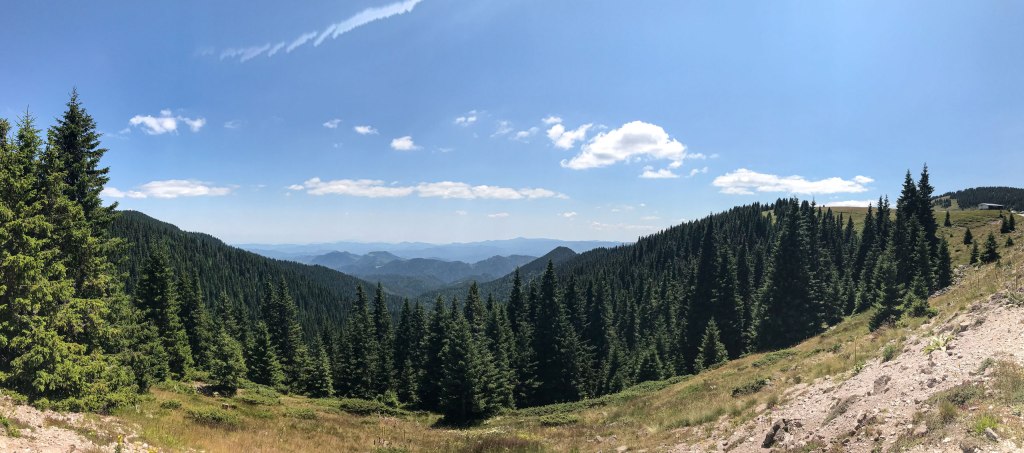
Bulgaria offers numerous opportunities for hikers. From The Seven Rila Lakes in Rila Mountain to the popular trail Kom-Emine along The Balkan Mountain, hiking lovers have many options to choose from.
In June, most of the snow has already melted. There is some left at hights over 2,200 m and there are parts, mostly in Rila and Pirin, where some snow “spots” don’t melt at all. Keep this in mind when planning a hike in Bulgaria!
During the summer season, hotels in resorts, and remote huts and chalets work full-time, so you can spend as long as you want in the mountains. Bulgaria has a few mountains with countless trails and beautiful places to visit.
Vitosha Mountain offers many opportunities for one-day getaways, if you’re visiting Sofia or another location nearby. There are many trails throughout the mountain and easy to reach huts (with a car or public transportation). Most of these huts also offer rooms, so you can spend the night (of a few nights) in the mountain.
May-June is the peak time for visiting waterfalls due to the snow melting and spring rains. Some trails near rivers and waterfalls could even get flooded, making it hard to cross or extremely slippery. If you plan to visit any waterfalls during June, please, be very cautious and wear proper hiking shoes!
Important! There might be more snow at the highest parts of the mountains. Unless you are trained and have proper gear, it’s best to choose trails at the lower parts. Afternoon rains and thunderstorms are common, so be cautious and always check the weather forecast before planning any hikes.
Rila and Pirin are the most popular mountains for hiking throughout the entire year. You can visit the official websites for more information.
*City tourism
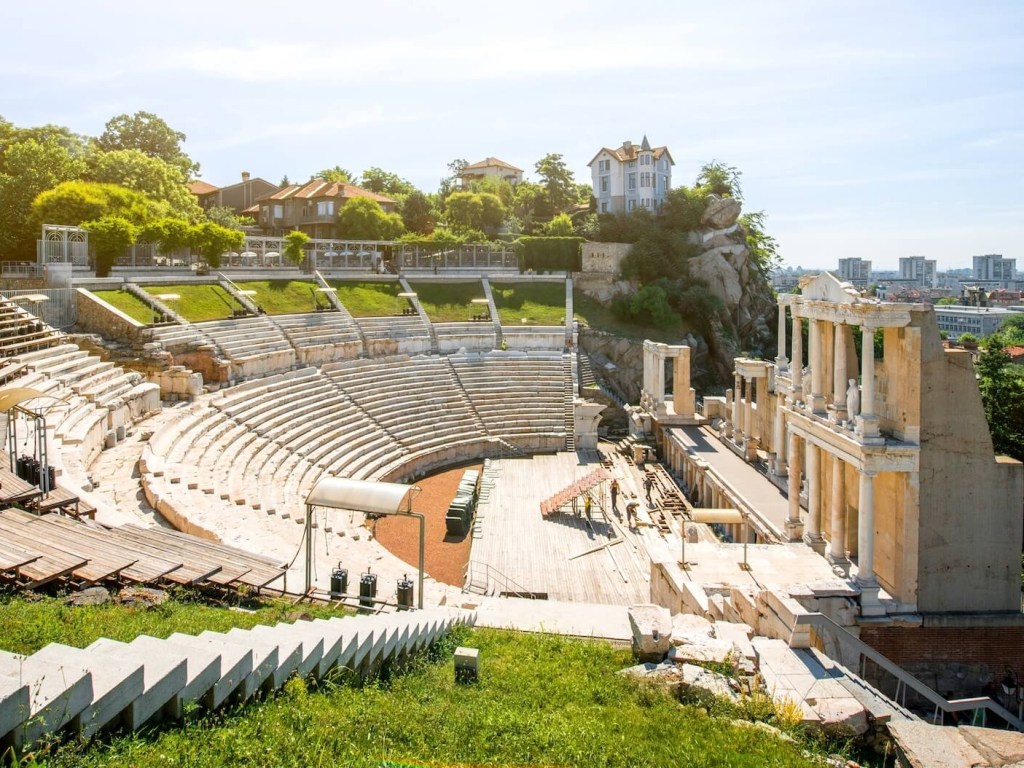
There are always options to visit museums, art galleries, theatres, ballets, attend city tours, and many more in the bigger cities. With the hot weather also come a lot of outdoor shows, art bazaars, music festivals, and folklore celebrations. Culinary tourism is always a great way to explore a foreign country and the warmer weather in June is great for such travels.
Below you can find the websites of some of the most popular and most visited cities in Bulgaria, where you can explore more options.
→ Sofia: Bulgaria’s capital city and a home to many historical and cultural sites, The National Opera and Ballet, The National Palace of Culture, Saint Alexander Nevsky Cathedral, and many more. It is the hearthbeat of city tourism in Bulgaria with endless options for sightseeing and entertaintment. (explore more opportunities – Visit Sofia)
→ Plovdiv: The second biggest city in Bulgaria and a cultural centre with many sightseeing options, including The Old Plovdiv Reserve and an ancient Roman theatre. Plovdiv is the 5th oldest city in the world and the oldest in Europe (with continuity of settlement).
→ Veliko Tarnovo: Translated as “Great Tarnovo”, it used to be Bulgaria’s capital city from 1185 to 1393. It is a toursist attraction for its numerous historical sights, such as Tsarevets Fortress and Old Tarnovo District. Throughout the year, the city holds numerous light shows titled “Sound and Light”, which attract thousands of visitors.
→ Varna: The third biggest city in Bulgaria and the biggest on our Black Sea coast. It is regarded as Bulgaria’s Sea Capital. Except sea tourism, you can also visit an astronomical observatory and ethnographic museums.
→ visitbulgaria.com: And if you’re still not sure when to come, where to go, and what to do, just open the official Visit Bulgaria website and explore countless opportunities throughout the country.
*Spa and wellness

Bulgaria offers countless options for spa and wellness tourism throughout the entire year. The country is also dotted with mineral springs, which attract thousands of visitors each year.
Some of the most visited Spa and Wellness resorts in Bulgaria are Velingrad, Sapareva banya, Sandanski, Hisarya, and Bansko, but there are many more! Sofia and Plovdiv also have many Spa and Wellness hotels.
Many of these resorts are located in mountainous regions, so you can combine your spa and wellness vacation with hikes or simply picnics in nature.
GENERAL INFORMATION
CURRENCY
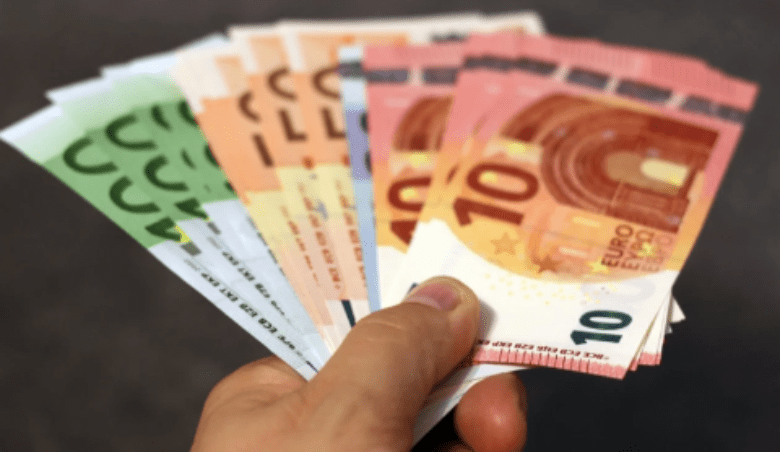
Starting on 01.01.2026, Bulgaria adopted the euro as its official currency. If, for some reason, you have Bulgarian lev at you disposal, you can easily exchange it in any bank without any fees.
TAXIS
Primarily, the taxis in Bulgaria are yellow and have a sign upon the roof saying ‘taxi/такси’. Some of the vehicles, however, are concidered eco taxis (usually when the cars are electric or hybrid) and are green in color.
Usually taxis have a light on the windshield by the passenger’s seat, signaling whether they are free or occupied – respectively, a green and a red light. However, there are many companies, so this practice may vary.
Furthermore, if you’re staying in our capital city Sofia, you have a variety of options to download a taxi app. Some popular options include:
→ TaxiMe: A popular and handy service that can take you anywhere within the city.
→ Yellow Taxi: One of the biggest taxi companies in Sofia.
→ Volt Taxi: This is a premium and more luxurious service, so the prices are higher than usual taxis. Their cars are dark green in color. They also have black minivans in their arsenal that can transport larger groups of people.
Unfortunately, in Sofia there are many fraudsters. Usually, they stay in front of the entrance of the Central Railway Station and the Central Bus Station and ask random passengers whether they need a taxi transportation. Not all of them are scammers, but it’s easy to come across one. Especially, if you stop a random taxi on the road. So, I would advice you to use one of the apps above when you need a taxi in Sofia.
PUBLIC TRANSPORT IN SOFIA
If you’re not a fan of taxis or want to immerse yourself in the pulse of the city, you can always use the public transport. Here are a few things you should know in advance.
*Types of public transport
There’s an underground network, currently consisting of 4 lines. Above the ground, there are buses, trolleybuses, and tramways. There are also 4 lines of night buses.
*Buying a ticket
There are two options to buy a ticket for the ground transportation – a physical one and an electronic one. The physical ticket can be bought from the driver. For the electronic one you just need to place your payment card onto a validation device. There are a few located near the doors when you enter. There are two types of physical tickets. If it has a QR-code, it must be validated, as well, on the same devices. If it looks like a reciept, you don’t need to validate it.
It’s the same for the underground – you can buy a physical ticket from the booth at the station or an electronic one by placing your payment card upon the validation device. If you have a physical ticket, you have to validate its barcode in order to enter the platform.
Important! There are inspectors checking random vehicles and metro trains for valid transport documents. If you have paid by card, you just simply have to place it onto their device and if you have successfully validated your card, you’ll pass the check. Don’t be a joyrider – there are fines for the offenders!
Visit Sofia Traffic website for full information about using the public transport and parking within the city.
TRAVELING BY TRAIN
Even we Bulgarians sometimes find it challenging to travel with our State Railways, so I can only imagine what it is like for an outsider. 😂
Their website is pretty decent and you can find useful information there, such as train schedules, ticket prices, and online live updates. But here are some additional tips for an easier and more comfortable trip by a Bulgarian train.
*Buying a ticket
You can either buy a physical ticket from the train stations or an electronic one from the website or through special devices at the train stations. You need to show your ticket (physical or electronic) to the train conductor when asked for it during the trip.
*Finding the right train
This could be a little challenging for foreigners. Basically, you need to know the final destination of your train in advance. This information is written (in Bulgarian) within a rectangle on the sides of some of the carriages. This way you’ll know which train to board. There are some more modern ones and this information is easily found on their digital screens right at the front. The bigger railway stations usually have information on every platform, especially Sofia Central Railway Station. There are digital screens showing the number, the destination, and the schedule of the train, departuring from each platform.
Also, there isn’t a practice of announcing the upcoming stops, so you should prepare yourself in advance as much as you can. For example, by taking a photo/screenshot of the train’s route or following the GPS service on your phone. Like this, you could eliminate the possibility of missing your stop or getting off on a wrong one. However, there are a few exceptions. The above mentioned modern trains also have speakers inside, announcing the stops are, so it’s easier to follow the route.
*Finding your seat
In Bulgarian trains you can buy tickets with or without a reserved seat. For most trains the standard ticket doesn’t have a designated seat and you can choose where to sit. You can get a reserved seat, if such is available, by paying a small extra fee for it. Some trains, however, always have designated seats for all the passengers and for some people it can be quite confusing to find them.
Basically, every carriage has its own number and all the seats inside are also numbered. When you buy a ticket with a reserved seat, you’ll find information about the carriage (in Bulgarian вагон) number and the seat (in Bulgarian място) number. Most trains have both first and second class. This is marked with large numbers 1 and 2 written on the carriages. A lot of people confuse those numbers with the numbering of the carriages themselves. But no, the number of each carriage is written inside small squares, usually next to the doors.
Once you are inside the right carriage, you just need to find your seat. The numbers usually go from 1 to 100 (or above). If the train has separated compartments, the numbers are usually above each seat. If it’s a big saloon, then search for them either above the seats (where the luggage goes) or by the windows.
Current repair work at Sofia Central Railway Station! For quite some time now, Sofia Central Railway Station has been under repairs. If you’re going to travel towards destinations, such as Varna, Ruse and Vidin (basically the northern half of Bulgaria), you have to board the train from Sofia Sever (Sofia North Station). You can either get there by a taxi/public transport, or you can board the provided intermediate train from Central Railway Station. It’s the same when traveling towards Sofia – you have to get off at Sofia Sever and board the intermediate train towards Centrail Railway Station, or use a taxi/public transport to get to your destination within the city.
And if you ever decide to board a Bulgarian train – good luck! 😂
RELIGION
The traditional religion in Bulgaria is Eastern Orthodox Christianity. The majority of the population practices it and most religious temples in the country are part of the Eastern Orthodox Church.
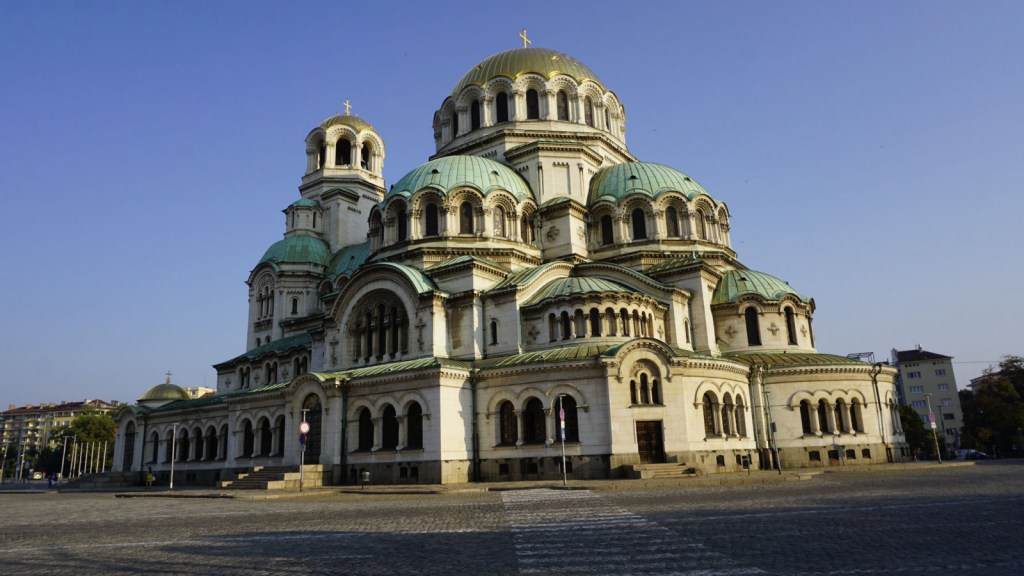
A very important thing to remember when visiting such a church is the dress code. You can’t walk inside scarcely dressed and your shoulders and knees must be covered. It is a holy place and more provocative clothes and appearance could cause resentment and it is possible a church official to ask you to leave or even escort you out. Failure to comply with the dress code could be seen as offensive.
DO BULGARIANS SPEAK ENGLISH?
Well, I do. 😂
But the situation is so-so.
From 1944 to 1989, Bulgaria was under Soviet occupation and became a communist country. Respectively, kids then mostly learned Russian at school. So, the older generations in Bulgaria as a whole don’t speak English at all or they speak just a little bit.
The generations after 1989 started learning English at school, so younger people in Bulgaria usually speak the language more or less. Many of them even migrate to the UK for higher education, and some students spend their summers in the USA as seasonal workers. So, if you ever need assistance with anything, I would suggest you to turn to a younger person, because there is a higher chance they’ll be able to understand and help you.
TIPPING IS NOT MANDATORY, BUT IT IS COMMON
You’re not obliged to leave the waiter a tip after you’ve visited a restaurant/café. However, it is a common practice, especially in the bigger and fancier restaurants. There is no minimum or maximum amount, nor a mathematical percentage that you can calculate. It is all up to you what the amount would be and weather you’ll leave a tip or not at all. Usually, clients who are pleased with the service tend to leave bigger tips, while bad service might leave the waiter ‘empty-handed’.
If the waiter picks up the check, but you’re still at your table, they are obliged to give you the change (if the amount you have given is higher). So, usually, we say to the waiter that the amount we’ve put is ‘correct’, suggesting there is no need to give us the change.
Respectively, if you don’t want to tip the waiter, just wait at your table for your change. However, there might be some exclusions in certain restaurants, especially if they’re fancier, but as a whole tipping is not mandatory.
NODDING MEANS ‘NO’ AND A ‘HEAD SHAKE’ MEANS ‘YES’…ISH
This information is widely spread across the internet, because other people find it quirky, but it is not entirely true. Head movements in Bulgaria are very likely to leave you quite confused, because we basically move our heads in all sorts of ways and speeds. To say it simply, the most important thing you need to observe is our facial expressions, because they tell you what we mean.
A grimace and a frown means ‘no’/refusal and can be accompanied by a nod up and down or a shake to the sides, usually done in a faster way. A friendlier expression, often with a slight smile, means ‘yes’/agreement and can be accompanied by either a nod up and down or a shake to the sides, usually done in a slower way. We also tend to bobble our heads, similar to people in India, when we mean ‘okay’ or ‘I understood’, usually done in a faster way. A slower movement might mean ‘maybe’ or ‘I’ll think about it’ or anything else, depending on the conversation. 😂
No matter the head movement, observe the facial expression, we make a lot of those. 😂 But most of all, if you’re not certain what the other person means, you can simply ask – we, Bulgarians, are friendly and warm people in general. (There are always exceptions, of course 😂)
A visit to Bulgaria could leave you very surprised or even confused. I hope this information will be helpful to you and will make your stay easier and more pleasant! 💙
Till the next time!
Lina Dimitrova
25/05/2026
January | February | March | April | May | June | July | August | September | October | November | December
 Rings of Saturn Blog
Leave a comment