Venus is the second planet from the Sun and the “home planet” of women according to John Gray’s book “Men Are From Mars, Women Are From Venus”. But how much more do you know about it?
Below I’ve gathered 10 interesting facts about the planet Venus!
1. Venus is a rocky planet with Earth-like size
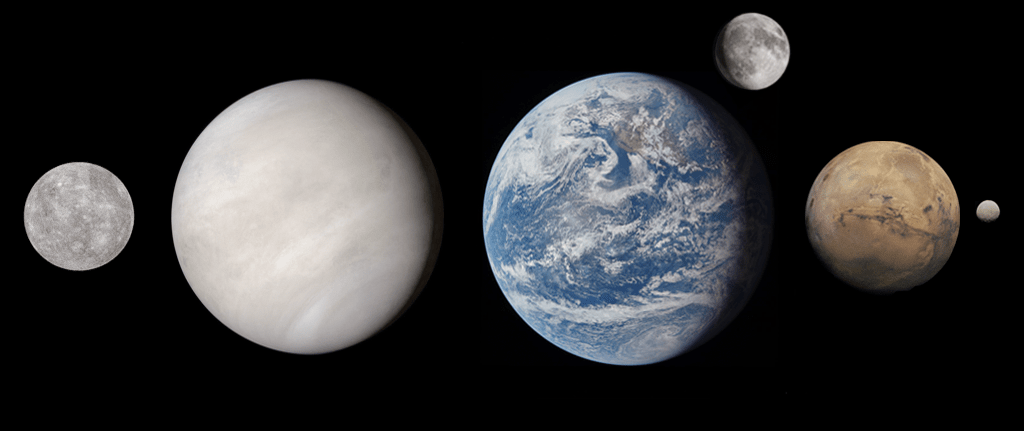
Venus is one of the four terrestrial planets in the Solar System. It has very similar to Earth size, mass, and internal structure. The planet’s diameter is 12,103.6 km (7,520.8 mi), which is only 638.4 km (396.7 mi) less than Earth’s, and its mass is 81.5% of Earth’s, making it the third-smallest planet in the Solar System. For that reason, Venus is often referred to as Earth’s “sister” or “twin”.
2. Venus is the hottest planet in the Solar System
Even though Mercury is closest to the Sun, it doesn’t experience temperatures as high as on Venus’ surface. The planet’s atmosphere consists of 96.5% carbon dioxide, 3.5% nitrogen, and traces of other gases. The richness of carbon dioxide generates the strongest greenhouse effect in the Solar System, creating surface temperatures of at least 462°C (864°F) – hot enough to melt lead.
Furthermore, the mass of Venus’ atmosphere is 92 times that of Earth’s, whereas the pressure at its surface is about 93 times that at Earth’s. That is equivalent to the pressure at a depth of nearly 1 km (5⁄8 mi) under Earth’s ocean surfaces.
3. Venus spins “backwards”
Unlike most planets, including Earth, Venus has a retrograde rotation and spins in the opposite direction. This means that to an observer on the surface of Venus, the Sun would rise in the west and set in the east.
This is likely due to a massive, early collision with another celestial body that flipped its axis. Other theories suggest that the planet’s exceptionally thick atmosphere created strong solar tidal forces that slowed its rotation over billions of years, eventually reversing it.
4. It takes Venus longer to rotate about its axis than it does to orbit the Sun
One sidereal day (the time for one rotation about the planet’s axis relative to the stars) on Venus takes 243 Earth days, whereas one Venitian year is 224.7 Earth days. However, due to the retrograde rotation, one solar day (the time it takes the Sun to pass the same meridian twice – from sunsire to sunrise) is 116.75 Earth days.
Long story short, it takes Venus less time to make one full lap around the Sun than one full rotation about its axis.
5. Venus recieves less sunlight than Earth
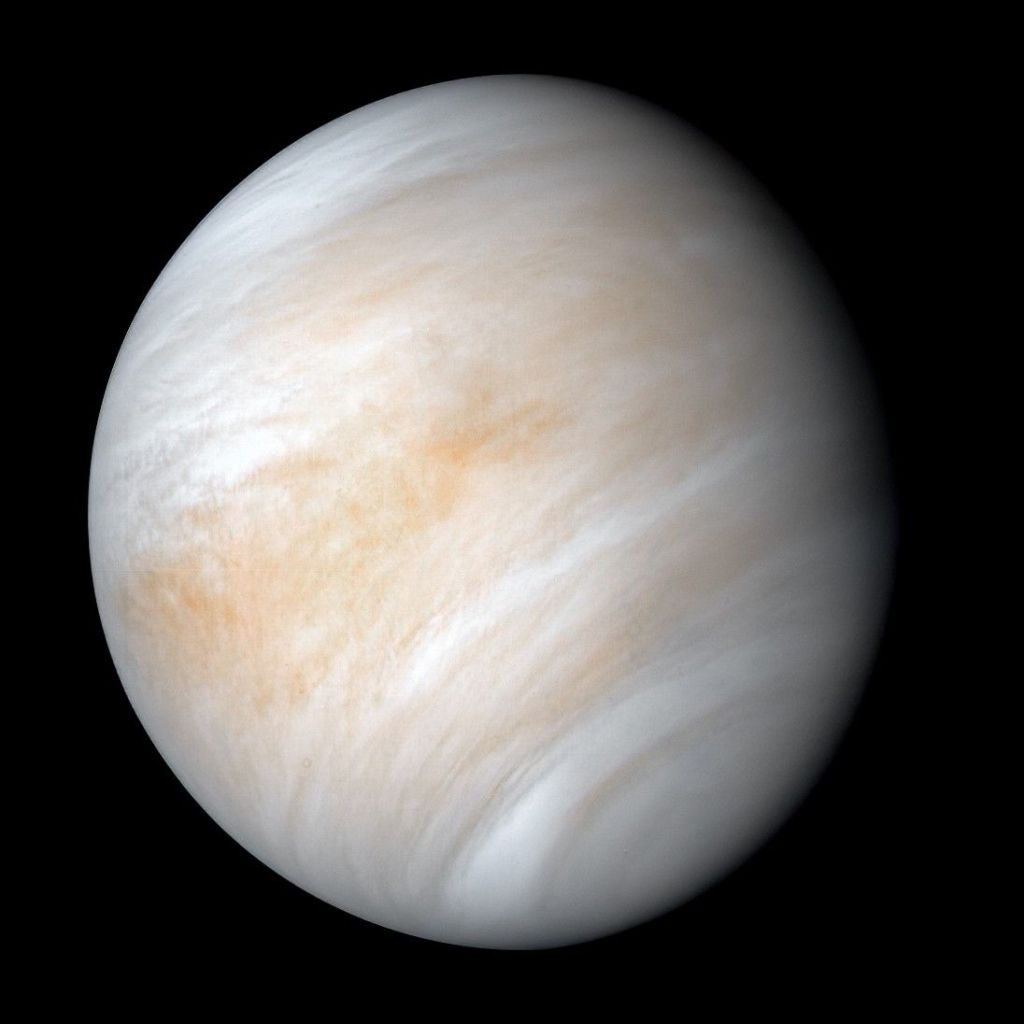
There are clouds 40 to 75 km (24.85 to 46.60 mi) above the dense carbon dioxide layer, which consist mainly of sulphuric acid. These clouds cover the whole planet preventing visual observation of the surface. Due to this, nearly 70% of the sunlight gets reflected. The permanent cloud cover means that even though Venus is closer to the Sun than Earth, it receives less sunlight on the ground – only 10% of the received sunlight reaches the surface.
6. Venus is the only planet, besides Earth, with volcanic activity
Venus has been confirmed to have volcanic activity, making it the second planet in the Solar System, besides Earth, with volcanoes. In fact, Venus has several times as many volcanoes as Earth with 167 large volcanoes that are over 100 km (60 mi) across. In total, over 85,000 volcanoes have been identified and mapped.
Venus’ surface is also filled with valleys and high mountains, one of which reaches 11 km (36,000 feet) – higher than Mt. Everest, as well as hundreds of impact craters.
7. Venus is the brigthest “star” in our sky
The brightest object in our sky is the Sun, followed by the Moon. If we exclude them and think only of the stars we see at night, the brightest one is Venus. Despite being a planet, we see Venus as well as the rest of the planets as star-like objects in the nightsky.
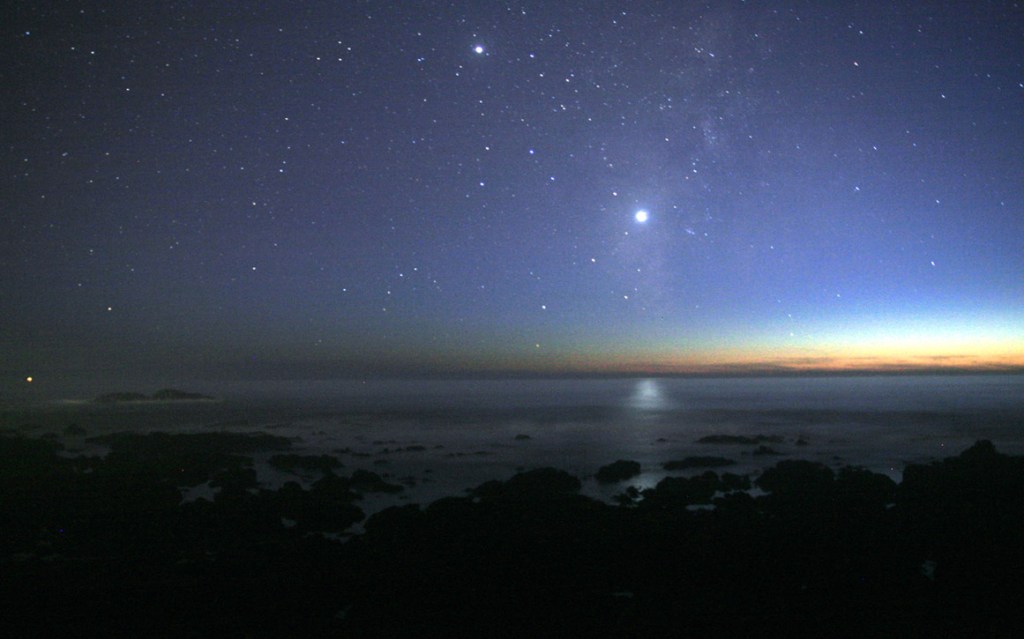
Depending on its orbital position, we see Venus either as the “evening star”, visible after sunset, or the “morning star”, visible before sunrise.
8. There’s potential for life in Venus’ upper atmosphere
The extreme conditions on the surface couldn’t possibly sustain life – lack of oxygen, dense carbon dioxide layers, temperatures of at least 462°C (864°F), and high atmospheric pressure.
However, about 50 km (30 mi) up from the surface of Venus temperatures range from 30 to 70°C (86 to 158°F). Also the atmospheric pressure at that height is similar to what we find on Earth’s surface. Many scientists speculate that these conditions could possibly sustain life, similar to thermoacidophilic extremophile microorganisms, in the cooler, acidic upper layers of the Venusian atmosphere.
9. Venus is the only planet named after a woman
The English name Venus originally comes from the ancient Romans. They named Venus after their goddess of love and beauty, who was known as Aphrodite to the ancient Greeks.
The planetary symbol of Venus consists of a circle with a small cross below it (♀). It is suggested to be a depiction of the hand-mirror of the goddess. Nowadays, the symbol is associated with femininity, adopted by biology as gender symbol for female, same way as Mars’ symbol (♂) is associated with the male gender.
10. Venus is painted in “The Starry Night” by Vincent van Gogh
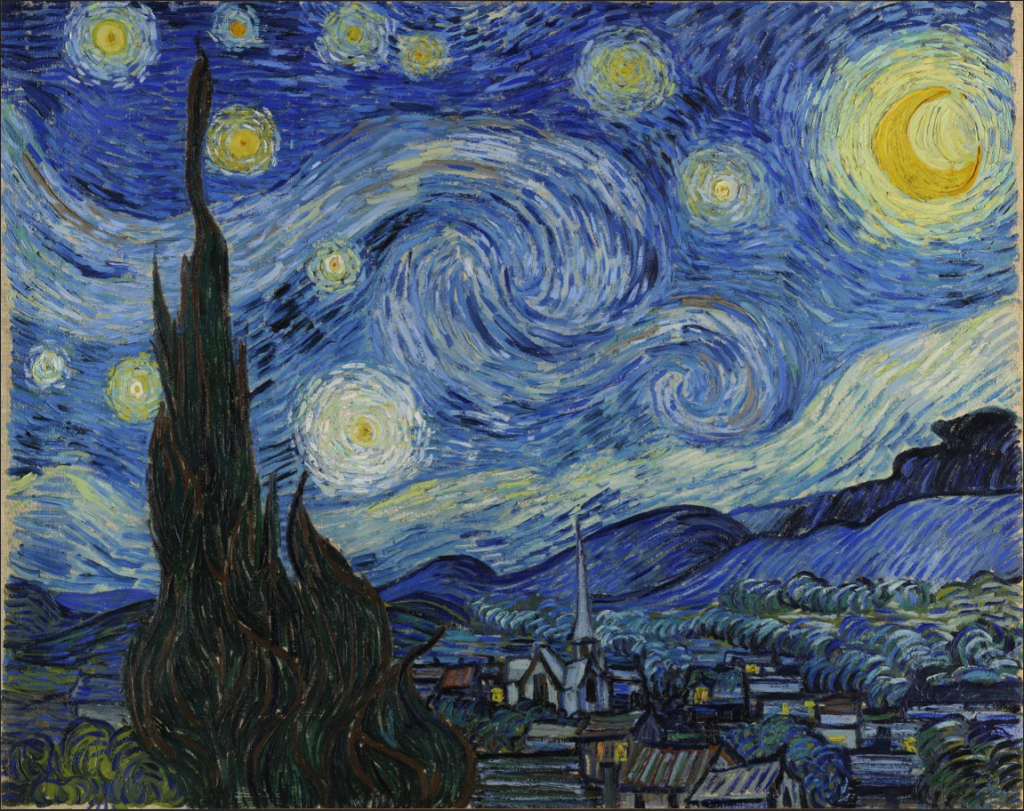
Van Gogh’s most famous painting was created in mid-June, while he was hospitalized at Saint-Paul-de-Mausole mental asylum in France. The painting was inspired by the view from his bedroom window and depicts the nightsky over the countryside. It includes the Moon with numerous stars, one of which is Venus.
Researches have determined that Venus (as the “morning star”) was visible at dawn in Provence in the spring of 1889, and was at that time nearly as bright as possible. So the brightest “star” in the painting, just to the right of the cypress tree, is Venus.
The “home planet” of women, Earth’s “sister” or “twin, the brithest “star” in our sky, the hottest planet in the Solar System, or the second rock from the Sun. These are all nicknames for the same planet – Venus. With its retrograde rotation and extreme conditions, it keeps on fascinating scientists and observers. And I hope you enjoyed reading and learned something interesting about Venus!
Till the next time!
Lina Dimitrova
13/04/26




 Rings of Saturn Blog