“Back in my days, the planets in the Solar System were nine!”
Do you also remember the time when the planets were nine? I sure do! Even though I was very little, I remember learning about the planets in the Solar System and how Pluto was the last one on the list. And then, suddenly, there was no longer a planet named Pluto!
Did it disappear, I wondered. Or perhaps collided with another object or exploded somehow?
No, no, nothing of the sort. Simply, a new concept was born and little Pluto got downgraded to a dwarf planet. 😔
Why is it so, you might wonder. What is a dwarf planet anyway? And how dare anyone strip Pluto of its status?
Continue reading for the answers.
What is the definition of a planet?
According to IAU (International Astronomical Union), there are three aspects that encompass the definition of a planet in the Solar System. First one claims that the celestial object must be orbiting our star. Secondly, it needs to have sufficiant mass to assume hydrostatic equilibrium (a nearly round shape). And last but not least (and most important), the object must have “cleared its neighbourhood” around its orbit.
The last one means that the object must hold a dominance of its orbit, i.e. there are no other objects in comparable size in the same orbital path other than its natural satellites or those under its gravitational influence.
Since the adoption of this concept in 2006, the planets in the Solar System are as follows (in increasing distance from the Sun): Mercury, Venus, Earth, Mars, Jupiter, Saturn, Uranus, and Neptune. The former four are terrestrial planets and the latter four are gas giants.
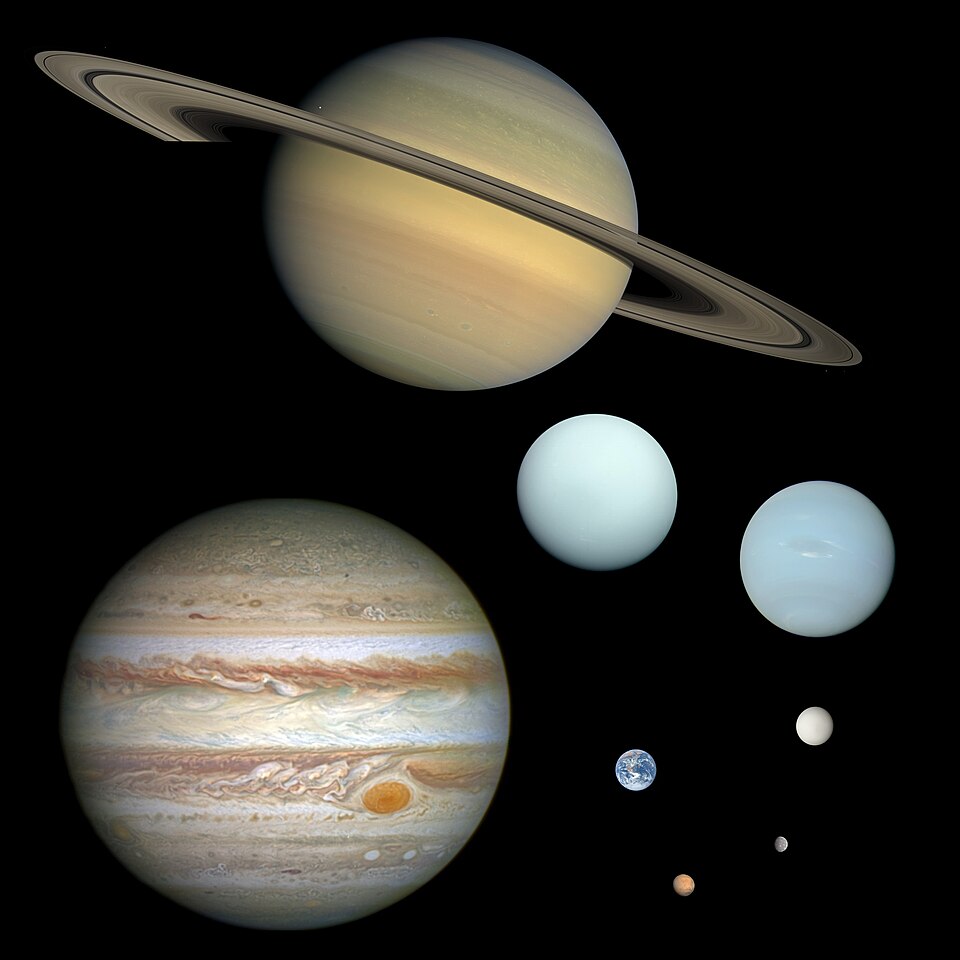
Six of these planets have natural satellites and/or a ring system (not shown on the image above). Earth has one moon, Mars has two, while Saturn has 274 (so far) discovered natural satellites and a massive ring system. Mercury and Venus don’t have neither moons, nor a ring system, but both have achieved orbital dominance and remain classified as planets.
What is the definition of a dwarf planet?
A dwarf planet is a small planetary-mass object orbiting around the Sun, massive enough to be gravitationally rounded, but insufficient to achieve orbital dominance like the eight abovementioned planets. In other words, a dwarf planet meets the first two criteria, but not the third.
The most popular dwarf planet is Pluto. For decades, Pluto was considered the ninth and smallest planet in the Solar System until the “dwarf” concept was adopted in 2006. It orbits the Sun within the Kuiper Belt, alongside other small objects, including dwarf planets Orcus, Haumea, Makemake, and Quaoar. This means that Pluto hasn’t achieved orbital dominance, so, in 2006, was downgraded to a dwarf planet.
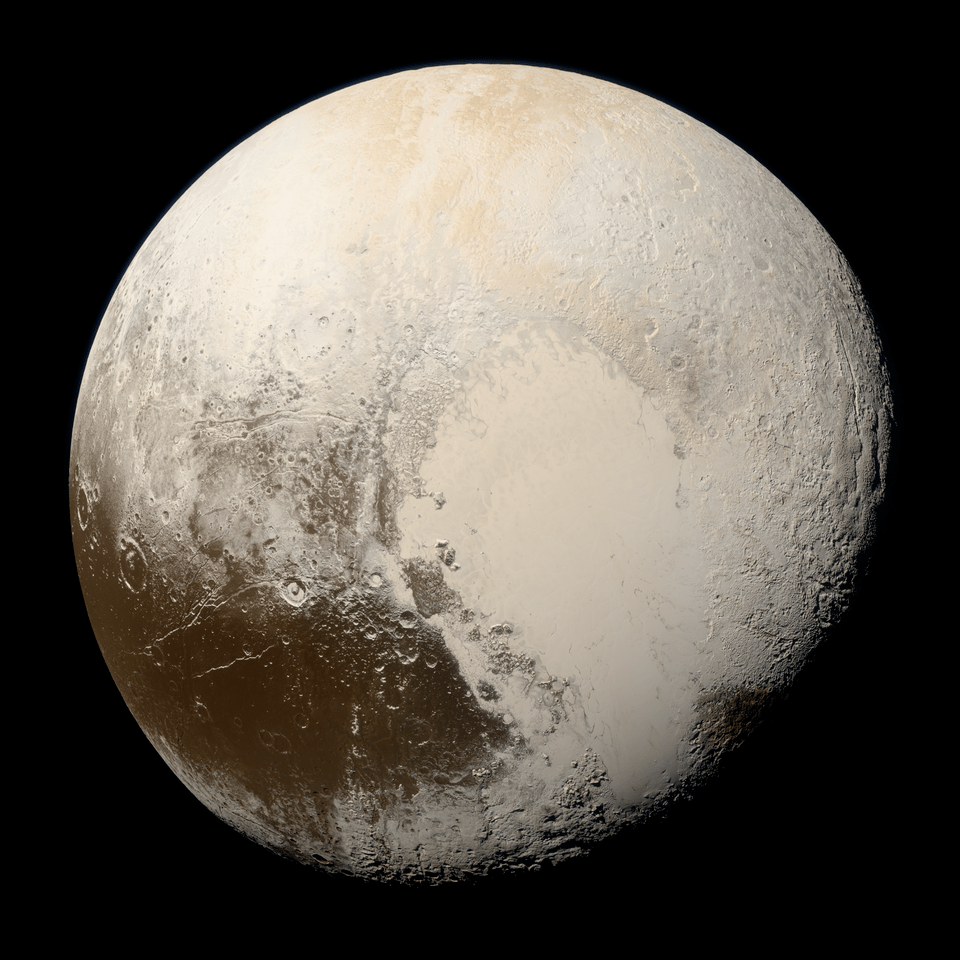
However, dwarf planets are capable of being geologically active. Some have cryovolcanoes (ice volcanoes) that erupt molten ice, ammonia, or methane. For that reason many planetary geologists consider dwarf planets and planetary-mass moons as planets. This has lead to many debates and protests over the past two decades among scientists, claiming the concept is flawed, unsientific, and even rushed.
IAU’s decision has sparked public outrage, as well. Even though Pluto is just a celestial body, many sympathize with it and want to have it reclaimed as a planet. There have been numerous memes, slogans, and art works about it over the years, such as “Make Pluto planet again” and “Dwarf planets are planets”.
For the time being, however, it doesn’t seem like Pluto or any of the other dwarf planets are going to be reclassified as planets. Unless, of course, a newer concept emerges.
Till the next time!
Lina Dimitrova
02/03/26
 Rings of Saturn Blog