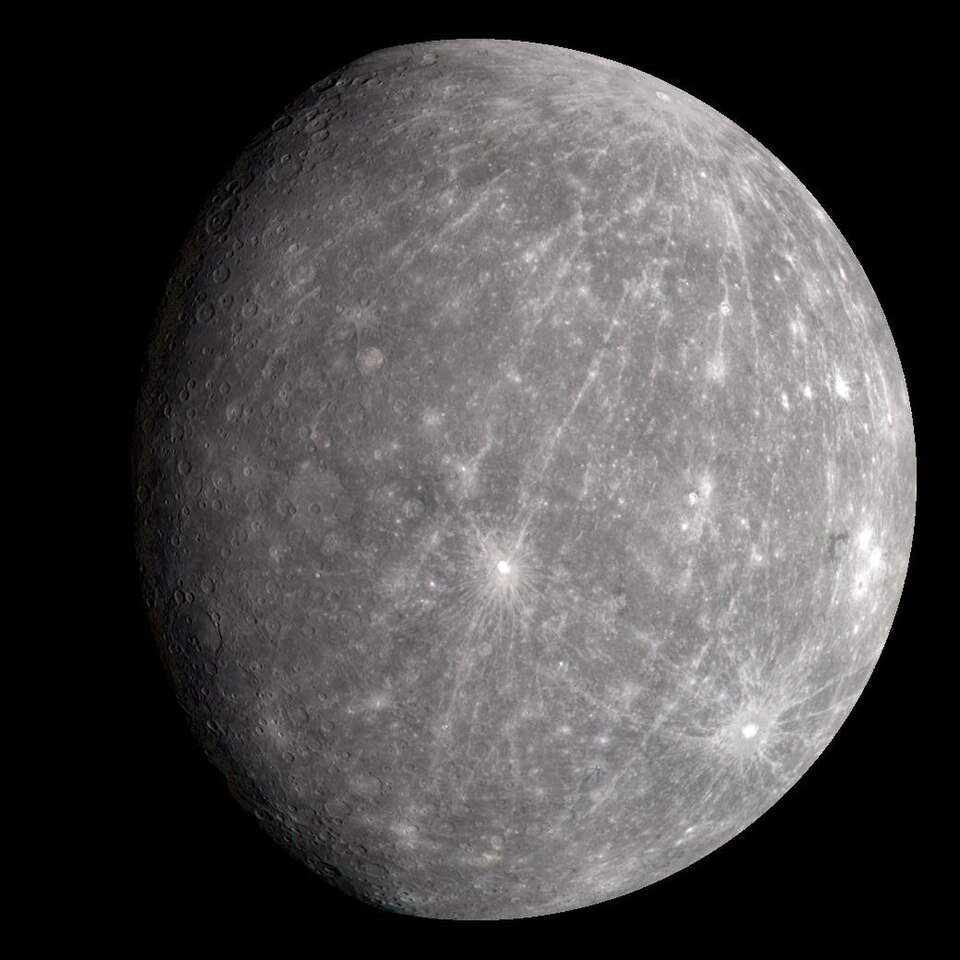
Mercury is the first planet from the Sun and the smallest within the Solar System – it’s only slightly larger than our own Moon. But how much more do you know about it?
Below I’ve gathered 10 interesting facts about the planet Mercury!
1. Mercury is a rocky planet with a Moon-like surface
Mercury is one of the four terrestrial planets in the Solar System. It has a trace atmosphere, which has allowed thousands of meteoroids and comets to easily reach the planet’s surface. Mercury is dotted with impact craters, which vary from small bowl-shaped cavities to multi-ringed impact basins hundreds of kilometers across.
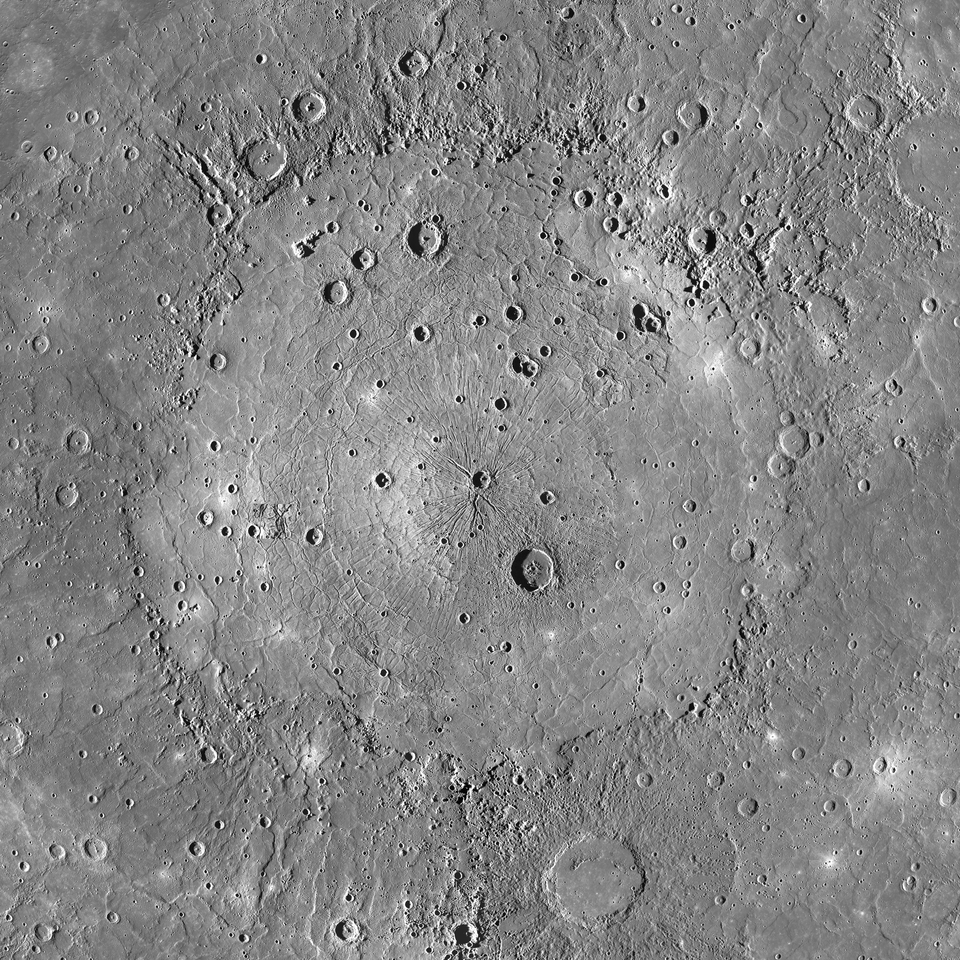
The largest known basin is Caloris, spanning 1,550 kilometers (960 miles) in diameter. The impact was so powerful that it caused lava eruptions and left a concentric mountainous ring ~2 kilometers (1.2 miles) tall surrounding the impact crater.
2. Mercury is smaller than the moons Ganymede and Titan
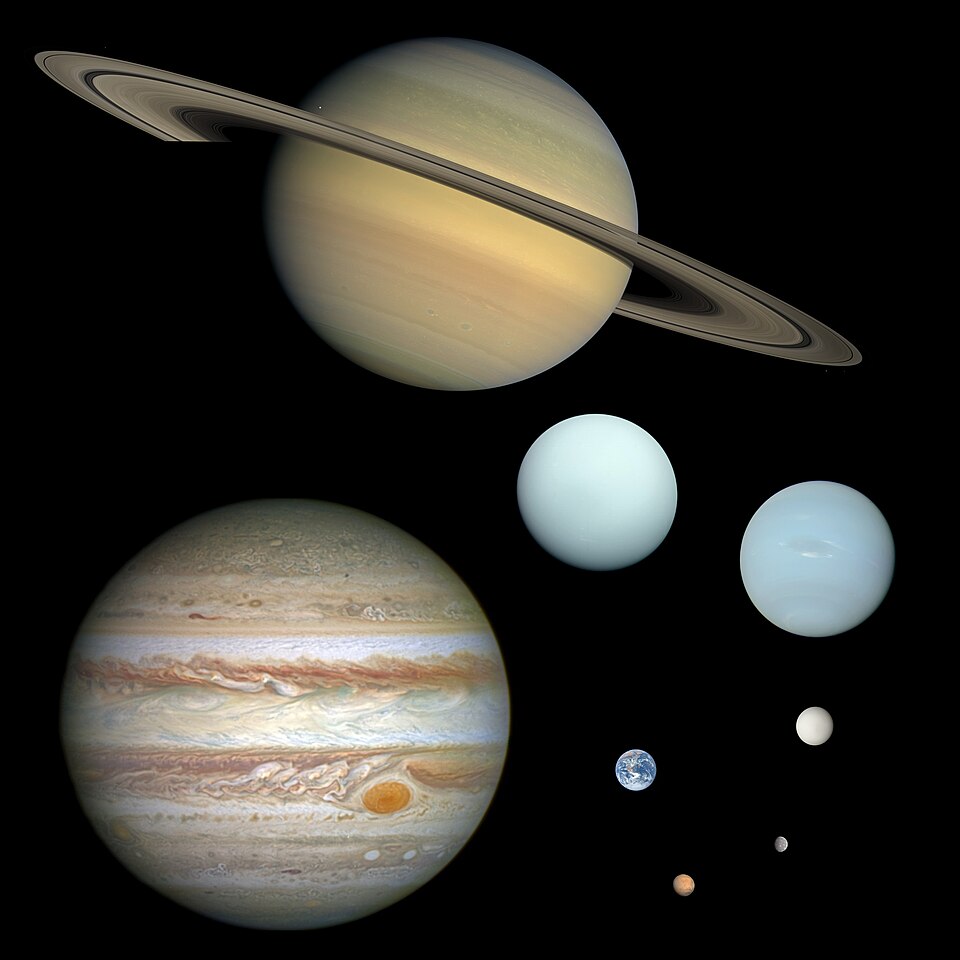
Mercury’s equatorial radius is 2,439.7 kilometres (1,516.0 miles), making it the smallest planet in the Solar System. Mercury is a little more than 1/3 the width of Earth. It is even smaller than the biggest natural satellites in the Solar System – Jupiter’s moon Ganymede and Saturn’s moon Titan.
3. Mercury has an elliptical orbit
Mercury has the most eccentric orbit of all the planets in the Solar System. Its egg-shaped path takes it as close as 47 million kilometers (29 million miles) and as far as 70 million kilometers (43 million miles) from the Sun. Mercury rotates around our star every 88 (Earth) days, traveling through space at nearly 47 kilometers (29 miles) per second – making it the fastest orbiting planet in the Solar System.
4. One day on Mercury lasts two years
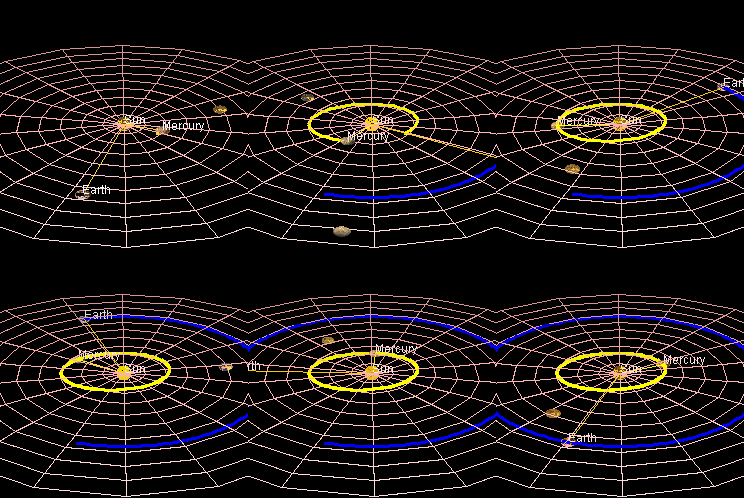
One solar day on Mercury lasts for about 176 Earth days. A solar day is the time it takes the Sun to pass the same meridian twice (from sunsire to sunrise). As already stated, due to Mercury’s proximity to the Sun, it takes the planet about 88 Earth days to complete one orbit around our star. That’s two times faster than the solar day.
However, Mercury completes one rotation about its own axis every 59 Earth days. Since the planet has an elliptical orbit around the Sun, each rotation is not accompanied by sunrise and sunset like most other planets. When Mercury is moving fastest and it is closest to our star, the Sun rises briefly, sets, and then rises again for some part of the planet’s surface. The same happens in reverse at sunset for other parts of the surface. So, one full day-night cycle on Mercury takes about 176 Earth days or two Mercurian years.
5. Nighttime temperatures on Mercury drop to -180°C (-290°F)
Being so close to the Sun, one would expect Mercury to be unimaginably hot. And that is true during the day when temperatures on the surface reach 430°C (800°F). However, due to the lack of atmosphere, nothing holds the heat on the planet and the temperatures go as low as -180°C (-290°F) during the night.
6. Mercury’s magnetic field has 1% the strenght of Earth’s
Despite its small size and slow rotation, Mercury has a significant magnetic field. According to data from the Mariner 10 spacecraft, it has about 1.1% the strenght of Earth’s. However, it is strong enough to deflect the solar wind around the planet, creating a magnetosphere.
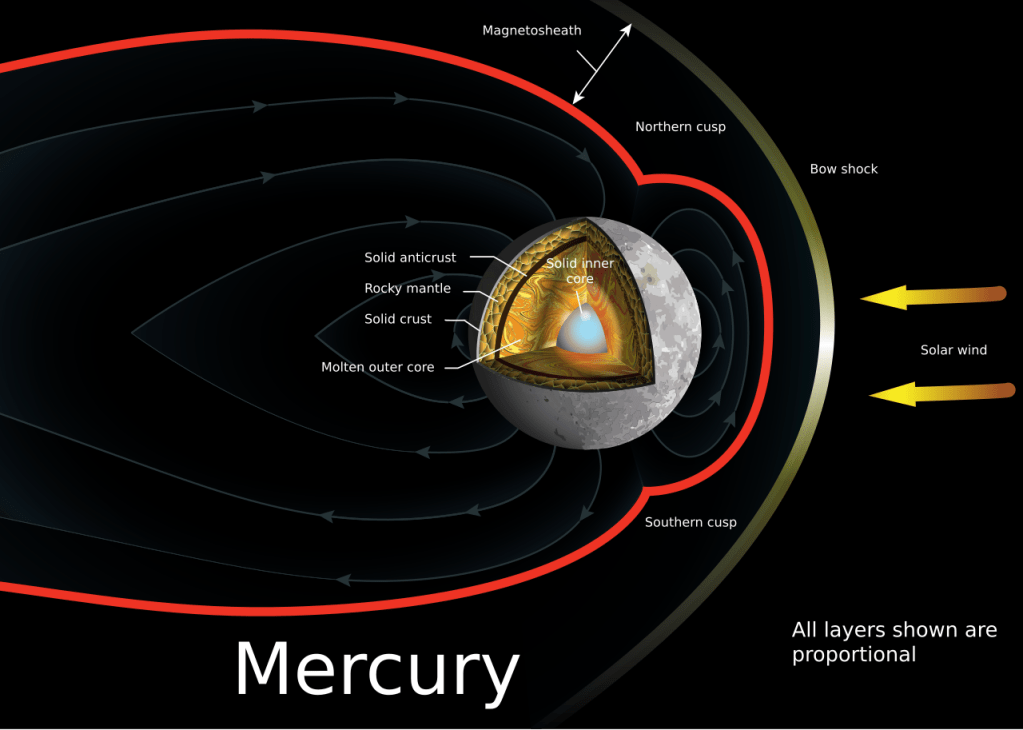
This magnetosphere, on its part, is strong enough to trap solar wind plasma. This contributes to the space weathering of the planet’s surface. The magnetosphere interacts with the magnetic field of the solar wind and sometimes creates intense magnetic tornadoes, which bring the solar wind plasma down to the surface of the planet. Due to this, ions strike the surface, knocking off neutrally charged atoms high into the sky.
7. Mercury couldn’t possibly sustain Earth-like life
Mercury is too small and hot for its gravity to retain any significant atmosphere for long periods of time. Instead, the planet has a thin exosphere made up of atoms blasted off the surface by the solar wind and striking meteoroids. It is composed of hydrogen, helium, oxygen, sodium, calcium, silicon and potassium, among others. The exosphere itself is not stable as atoms are continuously lost and replenished from a variety of sources.
Due to the lack of atmoshpere, Mercury experiences extreme temperatures and high solar radiation. According to NASA, the planet is not suitable for Earth-like life and it is unlikely that any living beings can withstand those conditions. However, some parts of the subsurface of Mercury may have been habitable, and perhaps life form, most likely primitive microorganisms, may have existed on the planet.
8. Mercury was named after the ancient Roman god Mercurius
Mercury has been observed for thousands of years and known by many names depending on whether it was an evening star or a morning star. The ancient Greeks were the first to realize the two stars were actually one. They knew it as Hermes for it’s fleeting motion.
The Romans named the planet after the ancient Roman god Mercurius – god of commerce and communication, and the messenger of the gods (whom they equated with the Greek Hermes), because it moves across the sky faster than any other planet.
9. Mercury’s axial tilt is almost zero
The best measured value of Mercury’s axial tilt is as low as 0.027 degrees. This means the planet’s poles are permanently shadowed strongly suggesting that water ice could be present in these areas, despite the extreme daytime temperatures. The nearly perfectly vertical rotation also means that the planet doesn’t experience seasons as many other planets do.
10. Mercury doesn’t have neither moons, nor rings
Mercury and Venus are the only two planets in the solar system that don’t have any natural satellites (moons). This is most likely due to their proximity to the Sun, which makes it difficult to retain a satellite or a ring system.
An undiscovered moon orbiting Mercury was theorized in the early 1970s, but it turned out to be misinterpreted data from the star 31 Crateris. The planet’s proximity to the Sun would also make it difficult to observe a moon from Earth. Furthermore, NASA’s MESSENGER spacecraft, which orbited Mercury from 2011 to 2015, didn’t detect any moons.
Small and fast, hot and cold, with almost perfect vertical self-rotation and filled with countless craters due to the lack of atmosphere – that’s the first planet in the row of planets in the Solar System! I hope you enjoyed reading and learned something interesting about Mercury!
Till the next time!
Lina Dimitrova
23/02/26
The Sun | Mercury |





 Rings of Saturn Blog