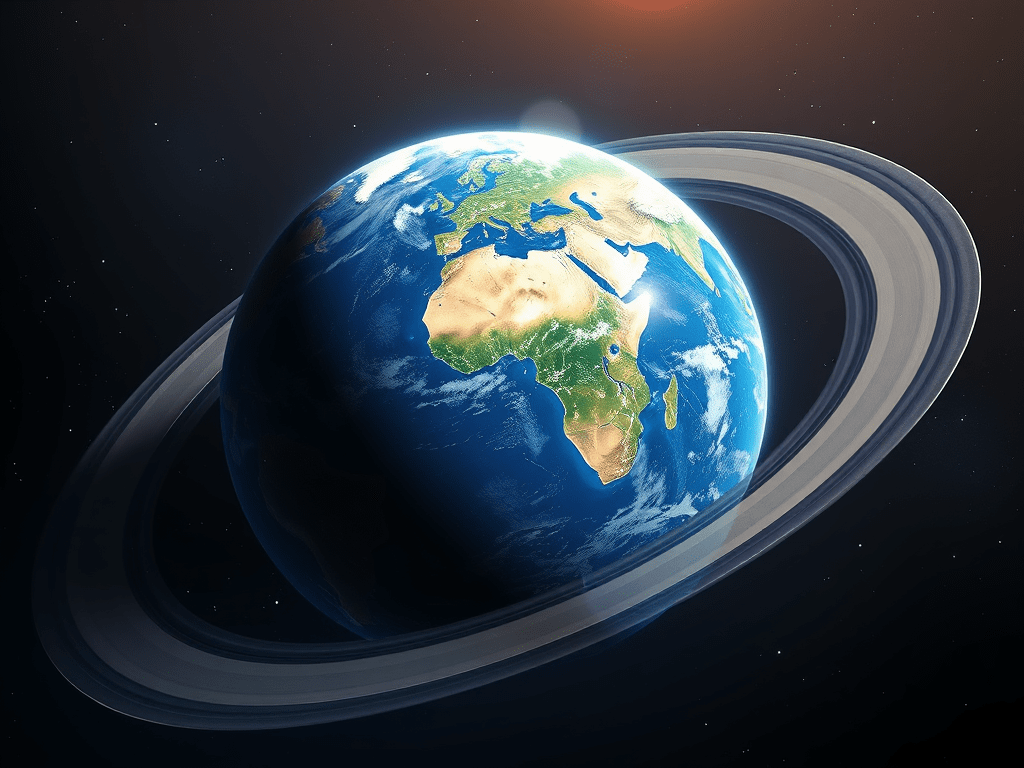
Imagine this – you go outside, you look up and see a big line of rings across the sky!
Sounds like a fantasy that came straight out of a Sci-Fi book or movie, doesn’t it? But did you know that scientists actually theorize that our planet might have had a ring system of its own in the past? And yes, we’re talking about rings just like the ones we can see orbiting around Saturn!
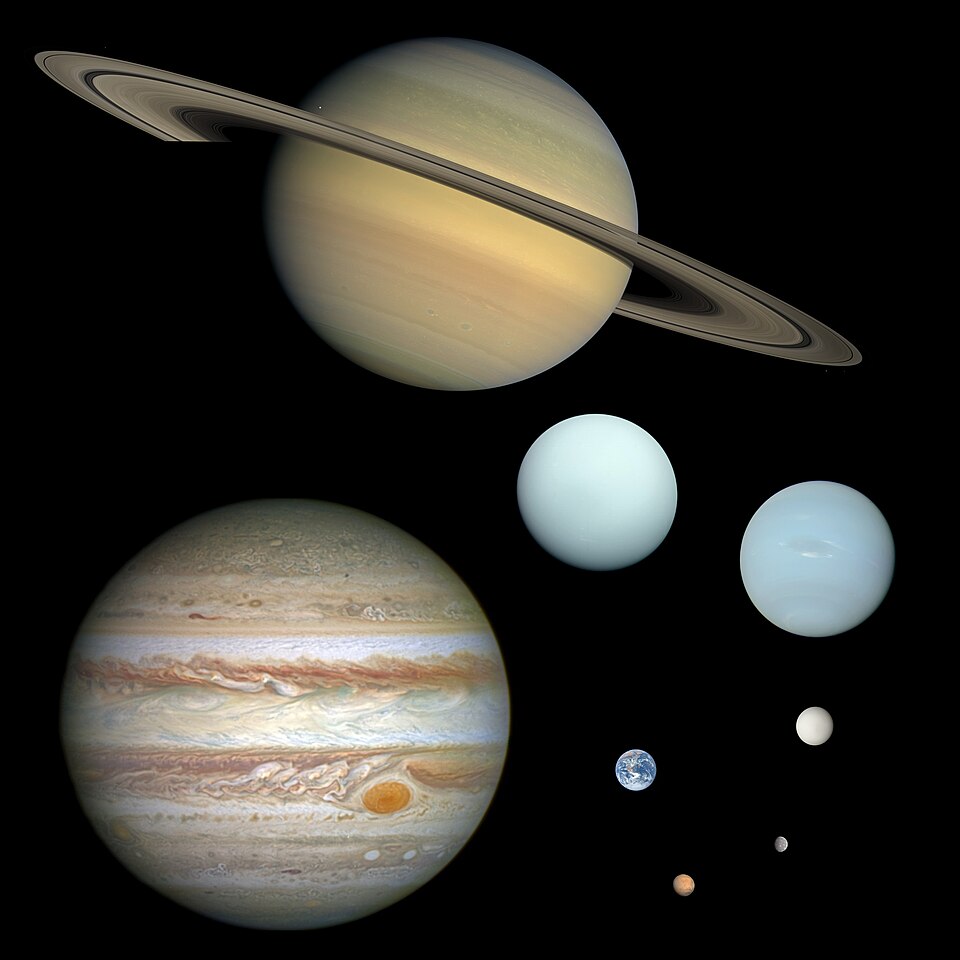
Well, okay, maybe not just like the ones Saturn has, but rings nonetheless! Besides, Saturn is not the only planet in our Solar System which has rings – such also orbit Jupiter, Uranus, and Neptune. However, they’re much smaller and fainter, so they’re not as easily visible and observable as Saturn’s. So, it makes sense to assume that our planet might have once had a ring system as well.

‘Why?’ as in ‘Why do scientists theorize Earth might have had a ring system in the past?’
As a beginning, this theory concerns the so called Ordovician period – a geologic period that spanned for 41.6 million years from the end of the Cambrian to the start of the Silurian period 443.1 million years ago.
Geologic periods are part of the geologic time scale. This is a representation of time which scientists divide based on Earth’s rock record. Basically, when time passes sedimentary and volcanic rock layers deposit on top of each other. Our planet is 4.5 billion years old, so that is a lot of deposition.
Based on this rock record scientists divide the time in Earth’s history into separate time fragments. This eases them in marking different timings and events, such as ‘Dinosaurs roamed the Earth during the Mesozoic era’, or ‘The most volcanically active time in Earth’s history was likely during the Hadean and Archean Eons’, or, in this case, ‘Scientists theorize that Earth might have had rings during the Middle Ordovician period’.
The table below shows the hierarchical units of the geologic time scale from largest to smallest.
| Geochronologic unit (time) | Time span |
| Eon | Several hundred million years to two billion years |
| Era | Tens to hundreds of millions of years |
| Period | Millions of years to tens of millions of years |
| Epoch | Hundreds of thousands of years to tens of millions of years |
| Subepoch | Thousands of years to millions of years |
| Age | Thousands of years to millions of years |
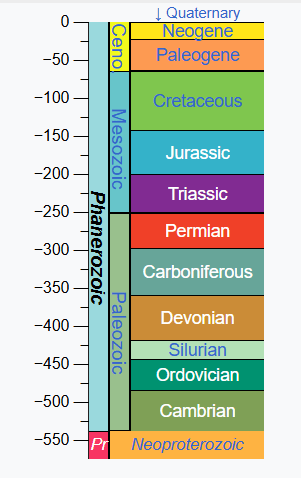
The Ordovician period is the second of six periods of the Paleozoic era, which is the first era of the Phanerozoic eon. And as you can see from the image above we are still in the Phanerozoic eon, in its third era called Cenozoic, in its third period – the Quaternary.
During the Ordovician period life on Earth was thriving. Invertebrates, called mollusks and arthropods, were dominating the ocean and it is thought that members of the latter probably started emerging on land during this time. And not just invertebrates – the first land plants are also known from this period. And fish species, the world’s first true vertebrates, continued to evolve and it is believed that late in that period marked the appearing of the first fish species with jaws.
But alongside this natural paradise the Earth was bombarded with meteorites – about 100 times as many per year struck the planet then, compared to today. This period is known as the Ordovician meteor event or Ordovician impact spike, which lasted for about 40 million years. A 2019 study suggests that the impacts might have increased due to the destruction of a parent body that was 150 km (about 93 miles) in diameter.
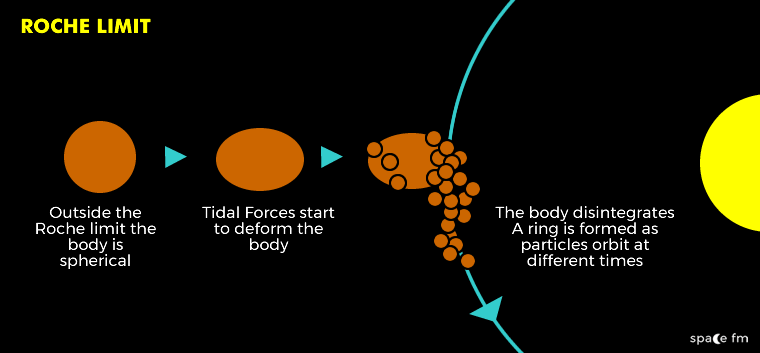
Another study from 2024 focused on 21 craters from the Ordovician meteor event. Their findings showed that the craters had formed within 30° of the equator at that time. In general, such impacts from meteors are scattered randomly throughout the surface of the planet. This further suggests that the event may have been caused by an asteroid that had passed within the Earth’s Roche limit and had broken up into a ring system.
A quick reminder that the Roche limit is the distance at which a large object is so close to a planet that the planet’s tidal force pulls it apart. I talked a bit more about the Roche limit and ring formations in my previous post.
Furthermore, this period overlaps with the Hirnantian glaciation, which occurred from approximately 460 million to around 420 million years ago. Evidence derived from isotopic data shows that the tropical ocean temperatures during the Late Ordovician were about 5°C cooler, compared to today. This would have been a major factor in the glaciation process.
There are many theories as to what had caused the Hirnantian glaciation, varying from volcanic aerosols, to sea level changes, and a gamma-ray burst. The 2024 study adds one more theory – the possibility that an asteroid passed through Earth’s Roche limit, forming a ring of debris around the planet. The rings might have caused a shadow upon Earth’s surface, which could have triggered significant cooling.
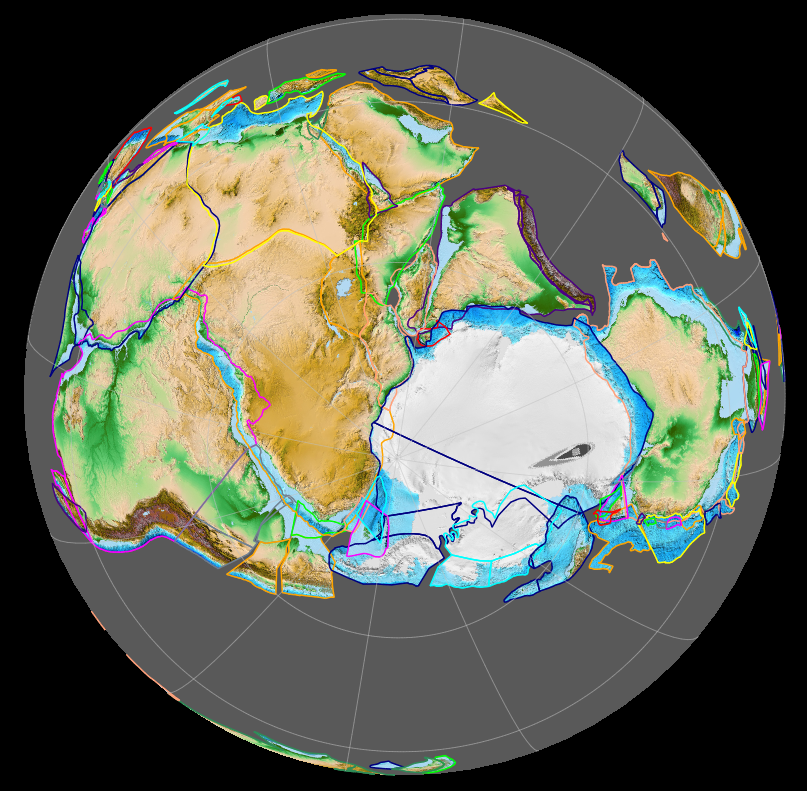
Now, keep in mind that we’re talking about millions of years ago. At that time there weren’t a few continents like we have today – there was one supercontinent called Gondwana (the remnents of which make up about two thirds of today’s continental area), located in the Southern hemisphere. A possible ring system could have shaded the continent from the Sun for long periods of time, which could explain the occurrence of the Hirnantian glaciation and why it suddenly receded during the Silurian period.
‘How?’ as in ‘How possible is it that Earth had rings during the Ordovician period?’
Okay, so I’ll take a moment for a few clarifications which should make things clearer. I’m sure you’ve heard of the terms asteroid, comet, meteoroid, meteor and meteorite, some of which I already mentioned in this article. But do you know what the difference between them is?
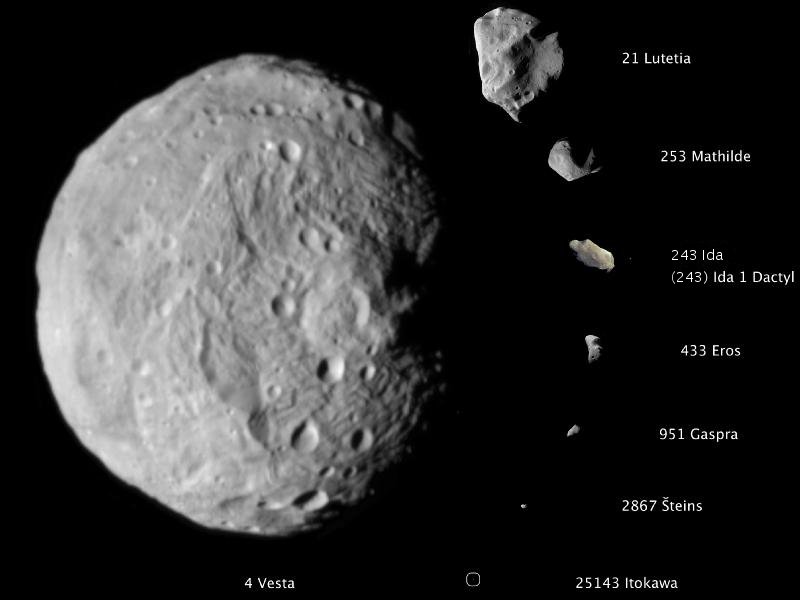
Asteroids are small rocky, metallic, or icy objects, orbiting the Sun within the Inner Solar System. They don’t have atmosphere and are not considered planetary objects. Asteroids vary in size – they can be as small as a pile of rocks up to hundreds of kilometers in width.
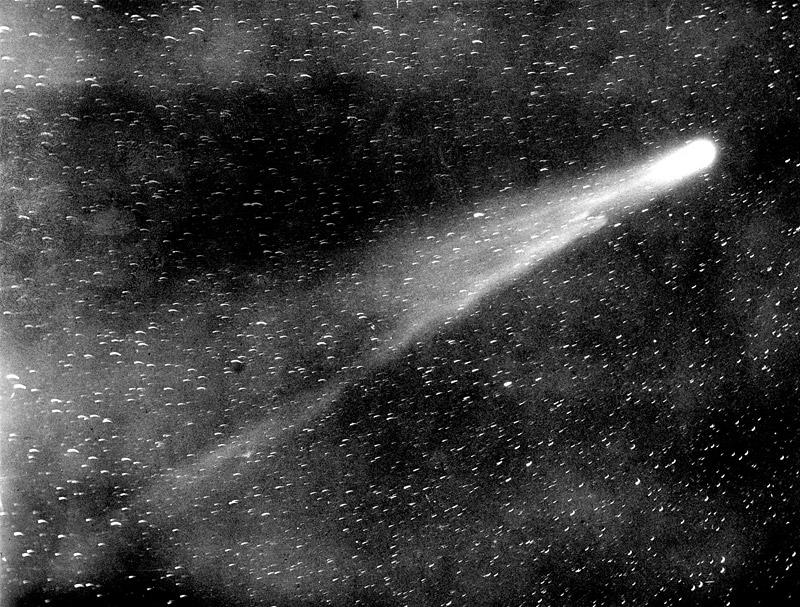
Comets are small icy objects, which warm up and begin to release gases when they pass close to the Sun. This phenomenon, called outgassing, creates a coma around the nucleus and often a tail of gases and dust blown out from the coma, creating the comets’ fascinating appearance.
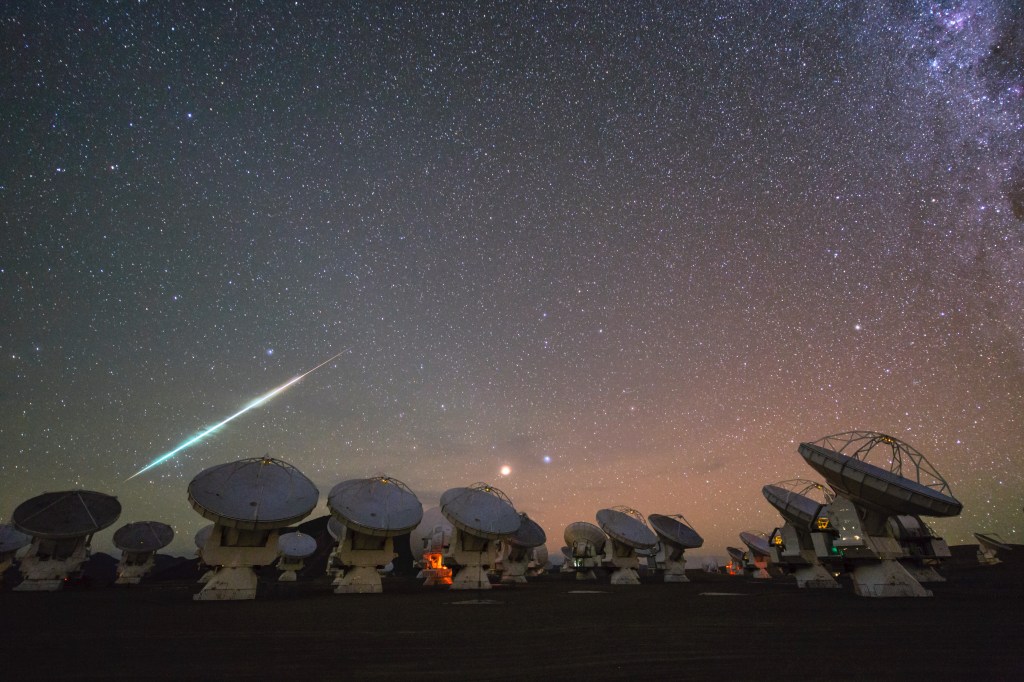
The significantly small objects, though, ranging from grains up to 1 m in size, are considered meteoroids. When such objects enter the atmosphere of a planet or a moon they get heated up and burn in the sky. This creates a glowing streak of light which we colloquially call a shooting star, but is scientifically known as a meteor.
However, some meteors do not burn completely in the atmosphere and actually make it to the surface of the planet or the moon. In these situations the meteor becomes a meteorite.
So, to summarize, the theory suggests that a large asteroid had a near-miss encounter with our planet, reached the Roche limit, which caused it to brake up to smaller pieces, creating a ring of debris around Earth. And then, for about 40 million years, the pieces gradually entered Earth’s atmosphere, turning into meteors, some of which reached the surface as meteorites.
But how possible is this theory and where could have the asteroid come from?
As I already mentioned, asteroids orbit the Inner Solar System, more specifically in the so called asteroid belt. This is a torus-shaped region in our Solar System filled with hundreds of thousands (or perhaps millions) of asteroids and even minor planets. It is located between the orbits of Mars and Jupiter.

With such a high population of asteroids hurdling around collisions are a matter of fact. These impacts may fragment them to numerous smaller pieces, which could form a new asteroid family. Some of the debris, however, escape the orbital stream and take on a new journey outside the asteroid belt where they are likely to, at some point, collide with a planet or a moon.
Over 50 000 meteorites have been discovered on Earth’s surface to date and it is believed that 99.8% of them have originated in the asteroid belt. Based on geologic studies, there’s evidence that during the Mid-Ordovician period there was an increase of L chondrite meteorites. This could be the result of a large L chondrite asteroid breaking up in the asteroid belt, sending a shower of debris in the Inner Solar System. However, analysis of impact craters of Earth, Mars and the Moon found evidence of the Ordovician impact spike on Earth, but not on Mars or the Moon. This suggests that it is more possible that a single body broke up proximal to Earth rather than in the asteroid belt.
The 2024 study also includes numerous calculations of the probability that these meteorites fell randomly into such a structure. The results show that it is highly unlikely for these impacts to be distributed in such a formation if they came directly from the asteroid belt.
‘This hypothesis may explain why all impact structures from this time are located proximal to the equator; impacts from bodies originating in the asteroid belt are expected to be randomly distributed across the globe. We have estimated the probability that this impact structure distribution resulted from random unrelated impactors at 1 in 25 million.’ – Excerpt from ‘Evidence suggesting that earth had a ring in the Ordovician’, written by Andrew G. Tompkins, Erin L. Martin & Peter A. Cawood; Monash University, Melbourne, Australia [x]
While this is still just a theory, there are many factors supporting it and I cannot help but wonder what it would have been like if Earth had rings today.
‘What?’ as in ‘What would it have been like if Earth had rings to this day?’
A ring system in our sky is definitely a wild thought to imagine. But would there have been any ‘us’ to actually observe those rings? Would I have been able to start this blog and share any of the stories that I want to? It’s hard to say.
Earlier I mentioned the Hirnantian glaciation. During this time the Late Ordovician mass extinction occurred. It is the first of the five mass extinction events in Earth’s history, often considered to be the second largest. The extinction was global, eliminating 49-60% of marine genera and nearly 85% of marine species.
At first, the glaciation expanded over the Gondwana continent and shifted Earth’s climate from a greenhouse to icehouse. Cooling and dropping sea levels led to habitat loss for many organisms. As I already mentioned, scientists still don’t have a definitive answer as to what caused the glaciation process, the ring system being only one of the possibilities.
Whatever the real reason for this glaciation was, it is fair to say that if Earth had gained and kept a ring system during the Ordovician period life on our planet would’ve been very different today. Depending on the size of the rings there would’ve been a smaller or highly significant shading upon Earth’s surface. For the fall-winter months some parts of the planet would’ve been mostly shaded, which could’ve led to very harsh and long winters. Presumably, it’s possible that they would’ve been followed by very hot and long summers.
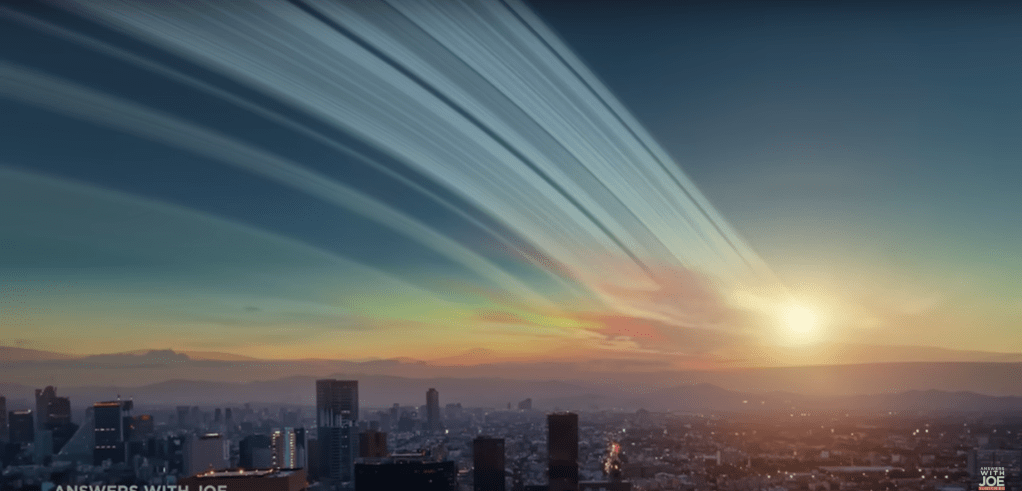
Of course, all of this would depend in which part of the planet you are located. At the equator the rings probably would’ve looked like a thin line across the sky and there wouldn’t have been much of a difference.

Moving north and south the ring system would’ve been much bigger and quite majestic to observe. But it would have led to much more significant shading.
Back then, like I already mentioned, there was one supercontinent, Gondwana. If the possible ring system was big enough to remain for more than 40 million years, it is interesting to theorize what would have happened to the Hirnantian glaciation. Would it have receded? Would Gondwana still have broken up into smaller continents? What would have life looked like today?
No one can say for sure. But one thing is certain – life is adaptable, we are built to find ways to survive. The planet wouldn’t have gone sterile. Even with harsher conditions there still would have been life today, because possible rings in the sky don’t eliminate the possibility of life on Earth.
Would have humanity evolved, though? Is it too horrible if I said ‘I hope not’? Because, you know, we cause way too much damage, guys. But it is likely that some version of us could have made it this far. Hopefully, a better one.
But for now the idea of rings around Earth remains a fantasy from a Sci-Fi book or movie. And even though the visual illustrations look really cool I think I prefer if our planet remained ringless. Sounds too cold! Brrrr.
Till the next time!
Lina Dimitrova
29/06/25




 Rings of Saturn Blog